
DELHI'S POLLUTION BATTLE: GRAP RELAXED
Category: Environmental Law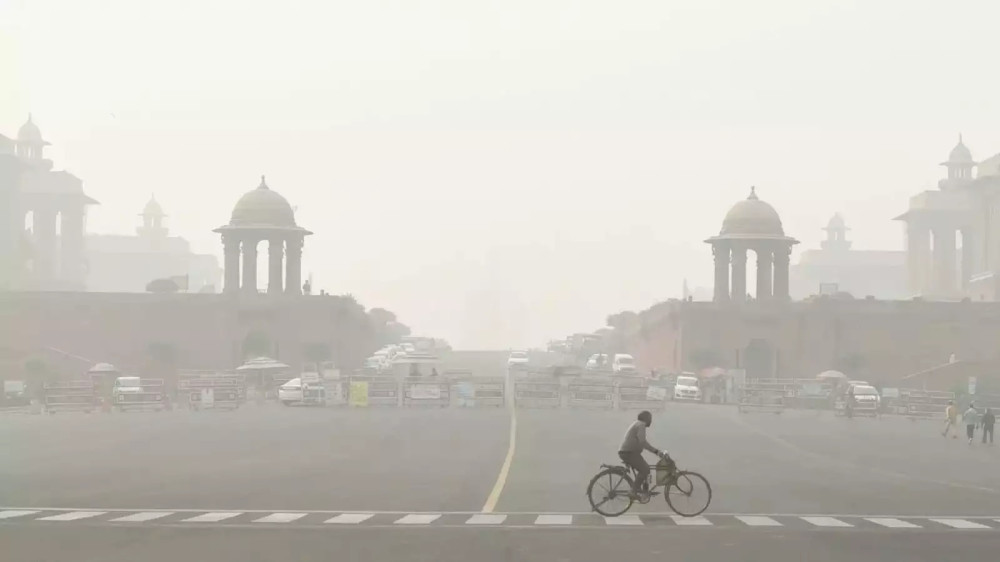
「 ✦ Content ✦ 」
INTRODUCTION
On December 5, the Supreme Court, which made a landmark ruling, partially modified the ceiling of Delhi's Graded Response Action Plan (GRAP) from Stage-IV to Stage-II. This comes as a significant milestone in Delhi's relentless battle with severe air pollution, granting that this has taken place following the Air Quality Index (AQI) values improvements. It demonstrates how crucial it is to evolve different flexible strategies to deal with pollution by causing the least disturbance to daily life and the economy.
BACKGROUND
It's been an issue of high air pollution for Delhi winters for a long time. The GRAP framework was created to fight this, with actions to be instigated in an escalating manner from Stage-I to Stage-IV based on AQI values. Stage IV, the toughest stage, imposes the complete banning of industrial activities, construction, and metric vehicle restrictions.
After November 30, a downward trend in the AQI was indicated, finally falling below "very poor" after having rested over 300 until the end of November. While GRAP-IV measures should have kicked in during the period of high pollution, Additional Solicitor General Aishwarya Bhati argued that they are "disruptive" to daily life and may now be eased. Senior Advocate Aparajita Singh supported the easing while underscoring the necessity of continuous monitoring to avoid a change.
The bench constituting Justices Abhay S. Oka and Augustine George Masih endorsed these submissions. The court allowed the Commission for Air Quality Management, under the context of ramped-up monitoring and preparedness to restore the stiffer controls should pollution levels escalate again, to downscale to GRAP-II.
KEY POINTS
An Act to control - The Court's decision correctly weighs between balancing the financial burden of strict controls on pollution and the need for ensuring public health. During GRAP-IV's suspension of the construction bans, industrial shutdowns, and vehicular restrictions, some relief has been offered to a few industries in checking ever-increasing pollution levels.
Offers Adaptive Pollution Control - The decision emphasized the need for adaptive pollution control. Although some measures were imposed through GRAP-III, the Court instructed CAQM to adapt these recommendations into GRAP-II to keep a careful watch on them, even during the comparatively better days.
Assigning Stronger Accountability - The ruling provides a fair measure of accountability in the clearance of air pollution, by indicating that, if the air quality index crosses certain thresholds (350 for GRAP-III, 400 for GRAP-IV), the CAQM shall restore stricter regulations.
Protection of appointments in the Judiciary - A judicial court commissioner has been ensured more protections, the Court ordered them to be let off from being penalized like other court officials due to the GRAP shortages. It ruled that they are equal in salary with the counsel Panel B and ordered that their names not be included in the show-cause notices, least to secure equity and protect the independence of the person executing the compliance.
Improving Public Awareness - The case has underlined how essential citizen participation is in the fight against air pollution. The ruling attempts to further improve public participation in the crusade for cleaner air through the courts, via mutual accountability and onus on pollution control efforts.
RECENT DEVELOPMENTS
The Supreme Court was concerned with operational mechanics and lifted GRAP-IV curbs. It ordered persistent Air Quality Index (AQI) monitoring and directed the government of Delhi to provide fair compensation to court commissioners. It was also specified that in case of heightened pollution levels, GRAP restrictions will be reimposed stringently and within good time. In reporting progress as well as monitoring compliance, the next hearing will continue to remain before the honorable court.
CONCLUSION
This decision marks a significant stride forward towards pollution management in Delhi. It sets a precedent for responsive, transparent governance in the fight against air pollution while strike a balance between environmental demands and economic realities. The decision emphasizes the extent to which the court actively stimulates civic consciousness and institutional accountability. Although the capital sees some reprieve, this ruling establishes the need for continued monitoring and collaborative efforts aimed at ensuring a sustained improvement in air quality.


